











My WORK
Leading with Purpose, Powered by Intelligence
My work sits at the intersection of advanced AI and deep human inquiry.
Below is an overview of the programs, research, and speaking engagements through which I explore conscious, values-aligned uses of AI.
Explore my pioneering work in consulting, innovation, and AI transformation.
Professional Journey
Over 30 Years at the Frontier of AI and Innovation
For over three decades, I’ve pioneered advancements at the intersection of AI, human potential, and innovation. My journey spans academia, startups, and Fortune 500 corporations, shaping the future of conscious technology.
Career Highlights:
- Global AI Lead, Accenture
- AI Strategy Consultant, Microsoft
- AI Professor & Researcher
- Author and Translator
- 130+ Peer-Reviewed Scientific Publications
- 4 Patent Awards
-
Speaker, Panelist, and Judge
for global talks and conferences - 5 Major Research Awards
- Research Focus in Qualitative reasoning, Neuro-symbolic AI, and safe, responsible AI development
- Founder of Multiple AI Startups
- Ph.D. in Artificial Intelligence


Consulting
AI Strategy with Soul
I guide founders, executives, and teams to integrate AI with intention and integrity, transforming businesses while honoring the human spirit. My expertise helps organizations stay relevant in an AI-driven world.
What I Offer:
- Visionary yet practical strategy for AI integration
- Tools for building transparency, safety, and explainability into your systems
- Guidance for companies at all levels of digital maturity—startups to enterprise
I Work With:
- Mid-market and enterprise organizations
- Executive teams & innovation leads
- Startups & product teams shaping AI
Consulting Case Studies
Discover how I’ve transformed challenges into opportunities through real-world consulting projects. Each case study highlights a specific problem, my tailored solution, and the impactful results achieved. Explore these stories in an interactive e-book format for a deeper dive.
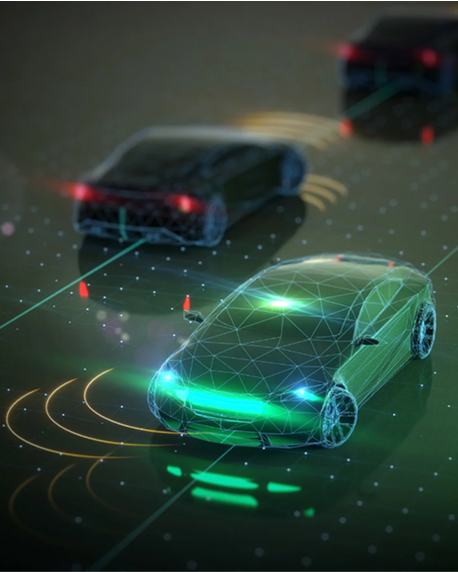
Providing Transparency to Autonomous Vehicles
- Problem Deep Neural Networks (DNNs) in autonomous vehicles (AVs) were opaque, making it hard to diagnose failures or prove algorithm maturity, leading to development halts and public distrust after accidents.
- Solution Replaced the opaque "Planning" module in the Apollo AV architecture with transparent qualitative models and formal traffic rules, explaining decision-making clearly.
- Outcome Improved transparency boosted trust, enabled regulatory compliance, and adapted AVs to edge cases, with a patented innovation validating its impact.
- Detailed Challenges:Autonomous Vehicles (AVs) heavily rely on Deep Neural Networks (DNNs), which are inherently opaque and non-interpretable.
- When DNNs fail, engineers lack visibility into the reasoning process, making debugging extremely difficult.
- This lack of transparency can halt development and lead to public distrust, especially in the aftermath of accidents.
- It is impossible to demonstrate algorithm maturity, a requirement for regulatory approval and investor assurance.
- Technical Steps:Leveraged the Apollo open-source AV architecture as the development platform.
- Replaced the black-box "Planning" module with a set of symbolic, qualitative models that explain the reasoning behind decisions.
- Incorporated formal traffic rules into the system to guide and constrain behavior in an interpretable, human-understandable way.
- Detailed Benefits:Achieved full transparency in decision-making, enabling engineers to trace and explain AV behavior.
- Increased public and stakeholder trust by making system logic auditable and defensible.
- Allowed the AV to adapt more effectively to exceptional situations compared to traditional DNN-based systems.
- Enabled the demonstration of algorithmic maturity, accelerating safe deployment and regulatory compliance.
- The solution was recognized with a patent (US11084496B2), solidifying its innovation and impact in the AV industry.
AI-Powered DNA Sequencing from Unstable Data
- Problem A biotech startup’s nanopore DNA sequencing faced unstable data, with only 30% of bases identifiable, risking their funding due to failed machine learning attempts.
- Solution Developed a transparent symbolic AI model to classify noisy data, creating a functional software solution in six months.
- Outcome Achieved 86% accuracy, secured funding, and earned a patent, marking a breakthrough in AI-driven genomics.
- Detailed Challenges:A biotech startup was developing a nanopore-based DNA sequencing technology but faced highly unstable time-series signal data.
- Two prior machine learning attempts had failed due to the inconsistency of the input.
- Only about 30% of DNA bases could be manually identified, and no working software solution existed.
- The absence of results threatened to derail the company’s next round of investment.
- Technical Steps:Applied a symbolic AI model I had previously developed for cognitive robotics.
- Built a qualitative pattern recognition system tailored to interpret noisy, unstable signal data.
- Developed a fully functional, transparent software solution in just six months, bypassing the need for data stability required by conventional ML.
- Detailed Benefits:Achieved 86% accuracy in automatically classifying DNA sequences, despite unstable input.
- Delivered full transparency in how the system made decisions—critical for scientific, medical, and regulatory contexts.
- The client secured funding, ensuring the startup’s survival and growth.
- The solution was awarded a patent (US10338197B2), positioning it as a significant breakthrough in AI-driven genomics.
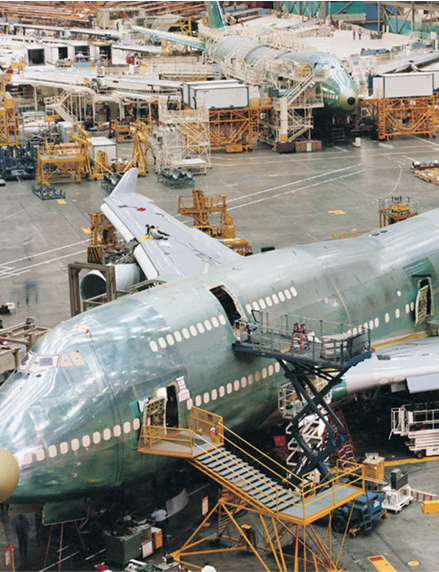
Accelerating Aerospace Manufacturing with Hybrid AI
- Problem An aerospace firm struggled with deformed fuselage seams, requiring months of trial-and-error engineering to maintain aerodynamics.
- Solution Combined a Qualitative Model to classify deformations with Deep Reinforcement Learning to optimize seam placement automatically.
- Outcome Reduced seam placement to seconds, saving millions in labor and delays, showcasing hybrid AI’s power in manufacturing.
- Detailed Challenges:An aerospace company struggled with a high-cost engineering problem: placing seams to close gaps in fuselage sections deformed during transportation.
- Thousands of engineers were involved in resolving each case through months of trial and error.
- Seam placement had to preserve the aircraft’s aerodynamic properties, making manual solutions slow and error-prone.
- Technical Steps:Developed a Qualitative Model to classify the fuselage cross-section into concavities and convexities.
- Applied Deep Reinforcement Learning to find the optimal seam configuration tailored to each unique deformation.
- Combined symbolic AI with learning-based methods for adaptability and precision.
- Detailed Benefits:Seam placement was automatically calculated in seconds, eliminating the need for months of manual engineering work.
- The company saved millions in labor and production delays.
- Demonstrated the effectiveness of hybrid AI approaches for solving complex, high-stakes manufacturing challenges.
Integrating Responsible AI into Microsoft’s MLOps Pipeline
- Problem Microsoft’s Responsible AI tools were underused as they weren’t in the MLOps pipeline, leading to 85% of models going undeployed due to trust issues.
- Solution Integrated these tools into the MLOps workflow with a user-friendly interface for seamless ethical checks.
- Outcome Standardized responsible AI, increased model deployment, and strengthened Microsoft’s leadership in ethical AI solutions.
- Detailed Challenges:Microsoft had developed a range of Responsible AI tools (impact assessment, transparency notes, error analysis, data bias detection, what-if analysis).
- These tools were siloed and not integrated into the machine learning development process (MLOps).
- As a result, adoption was low, and 85% of ML models were not deployed by customers—primarily due to lack of trust, poor transparency, and non-reproducible results.
- Technical Steps:Microsoft had developed a range of Responsible AI tools (impact assessment, transparency notes, error analysis, data bias detection, what-if analysis).
- I led the integration of all Responsible AI tools into the MLOps architecture, embedding them directly into the machine learning workflow.
- Made tools accessible with the click of a button, allowing data scientists to apply them seamlessly at various stages of development.
- Enabled responsible practices to become part of the default workflow—not an afterthought.
- Detailed Benefits:Responsible AI tools were actively used in the development and deployment of customer ML models.
- Improved trust, reproducibility, and accountability, leading to a higher deployment rate of AI models.
- Elevated Microsoft's position as a leader in operationalizing ethical AI at scale.
Empowering Ethical ML Deployment Through Transparent Business Reporting
- Problem Uneven ML performance across user cohorts at Microsoft hid biases, risking harm and uninformed deployment decisions.
- Solution Created a Business Owner Report with visual cohort breakdowns to highlight disparities and guide decision-making.
- Outcome Enabled fairer models and informed deployments, aligning technology with ethical responsibility and real-world impact.
- Detailed Challenges:Machine learning models developed for Microsoft customers often produced uneven performance across user cohorts.
- Biases in the data or model design were hidden in the black-box nature of ML, creating potential harm to certain users.
- Business owners lacked visibility into how models impacted different segments, and even data scientists sometimes couldn’t fully understand the implications.
- This led to uninformed deployment decisions with ethical and operational risks.
- Technical Steps:Designed a Business Owner Report that visually represented key model insights and highlighted disparities in performance across cohorts.
- Enabled clear communication between data scientists and business leaders, making model behavior understandable for non-technical stakeholders.
- The report flagged cohorts where performance was worse than random, indicating where models should not be deployed or where workarounds were needed.
- Detailed Benefits:Data scientists were empowered to refine and improve model fairness and accuracy.
- Business owners gained clarity and could make informed, responsible deployment decisions.
- Helped prevent unintended harm and enabled the strategic use of AI models in ways that aligned with both impact and ethics.
What’s Your AI-Readiness Level?
Take this quick assessment to discover your organization’s AI readiness level. Tailored for companies and leaders, it’s the first step to leveraging AI with confidence and purpose.
Entrepreneurship
As a serial entrepreneur, I’ve launched ventures that bridge AI and human potential. From founding startups to building impactful initiatives like What Matters Academy, my experience drives innovation with purpose.
Highlights:

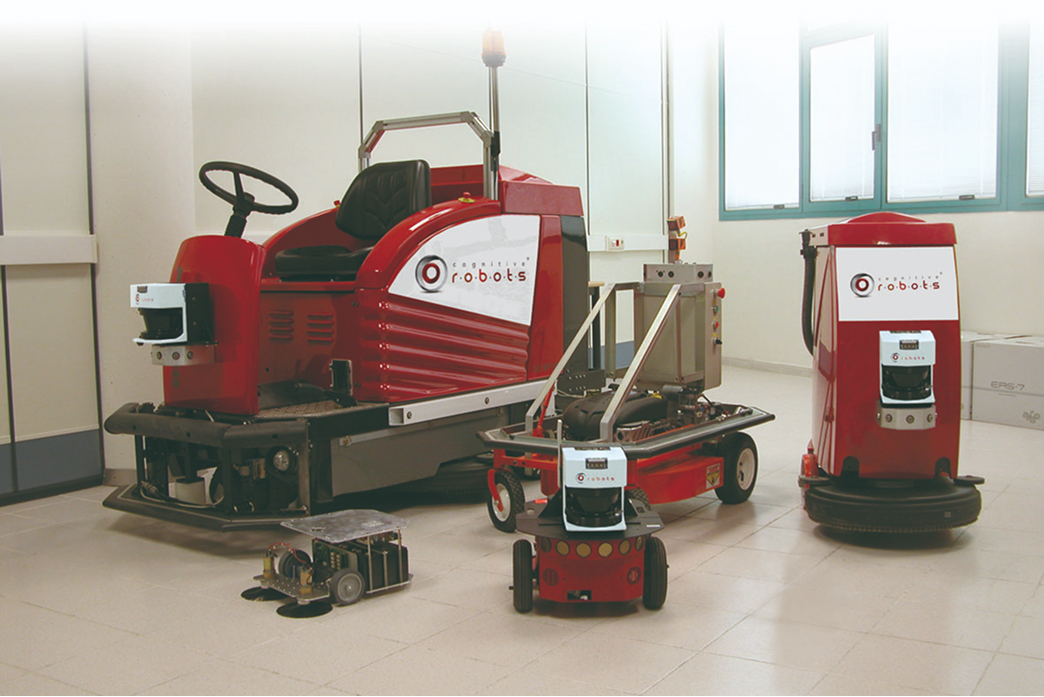
Cognitive Robots (2007)
Founded to develop advanced cognitive architectures, integrating symbolic reasoning with real-time sensorimotor control. We built systems enabling robots to understand their environment, anticipate outcomes, and adapt behavior, laying early foundations for neuro-symbolic AI, explainable robotics, and ethical AI design.
Impact: Pushed robotic behavior beyond rigid automation toward true autonomy, inspiring human-machine collaboration.
Patent (Abandoned:):Systems and methods for establishing an environmental representation (US20110082668A1).


Qualitative Artificial Intelligence (QAI) (2015)
Established to deliver cutting-edge AI solutions, notably a software for classifying unstable time-series signals from a nanopore chip for DNA sequencing. Overcoming failed machine learning attempts, I applied a symbolic AI approach, achieving 86% accuracy in six months and saving a biotech client’s funding round.
Impact: Marked a breakthrough in transparent AI-driven genomics, enhancing scientific and regulatory trust.
Patent (Awarded): System and method for use of qualitative modeling for signal analysis (US10338197B2).

What Matters Academy (2024)
Launched as an online education platform to teach relevant skills simply and empoweringly, starting with a course on toxin-free face care products. This sparked a community movement, leading to a product line and YouTube channel raising awareness about personal care toxins. It has evolved to offer AI education for conscious creators and entrepreneurs, serving as an umbrella for my consulting services.
Impact: Empowers individuals and businesses to apply AI mindfully, aligning technology with values.
Learn More

Patents
My patented innovations reflect my pioneering spirit in AI and robotics. These contributions, born from startups and consulting projects, showcase my commitment to advancing technology responsibly.
Highlights:
System and method for use of qualitative modeling for signal analysis (US10338197B2)
Scientific Contribution
Qualitative Signal Modeling for DNA Sequencing and Beyond
Introduces a system analyzing time-series signals with qualitative modeling based on angles and relative distances, effective even with unstable data.
Applied to nanopore DNA sequencing, achieving 86% accuracy despite only 30% manual identification, securing funding and a patent for AI-driven genomics.
Utilizing qualitative models to provide transparent decisions for autonomous vehicles (US11084496B2)
Scientific Contribution
Transparent Decision-Making for Autonomous Vehicles Through Qualitative Modeling
Uses qualitative models to translate sensor data into interpretable terms, incorporating formal driving rules for adaptability across regions without retraining.
Includes a visual interface for reviewing AV behavior and reasoning, accelerating development, proving maturity, and building trust for widespread adoption.
Training, validating, and monitoring artificial intelligence and machine learning models (EP3483797A1)
Scientific Contribution
End-to-End Validation Framework for Trustworthy Machine Learning Models
Offers a structured framework for training, validating, and monitoring ML/AI models, ensuring reliability and transparency across the lifecycle.
Includes tools for bias detection and performance validation, reducing risks, enhancing stakeholder confidence, and supporting regulatory compliance.
Systems and methods for establishing an environmental representation (US20110082668A1)
Scientific Contribution
Qualitative Mapping for Intelligent Robot Navigation
This method enables robots with numerical distance sensors to generate qualitative maps using symbolic descriptors (e.g., “close,” “far,” “left of”), supporting high-level reasoning and decision-making.
Bridged sensor data with symbolic AI, solving the SLAM problem with qualitative representations for more autonomous, explainable robotic navigation.
Working with Teresa is a breeze.
She is proactive and thorough and enthusiastic. The work we are doing is tricky in its abstraction. Both of us need to travel into the weeds then pull ourselves up to the greater purpose. She does that easily. She is also very well connected in her space of responsible AI.

Teresa has an immense depth of knowledge in the field of Al
and its applications both in the field of Responsible Al and outside of it. Most importantly, Teresa has the rare ability to explain and communicate complicated technical terms in the most simplified and understandable manner. I have had the pleasure to closely collaborate with Teresa and I can personally attest to the fact that Teresa is inspiring, emanates expertise and gains respect seamlessly, which is a great quality for a Leader.

It is a pleasure to be able to work with you, Teresa
because of your depth and range of experience and knowledge. I always enjoy our interactions and learn something from you.

It has been a real pleasure working with you
You are visionary and quickly drove impactful initiatives around accelerators, big customer planning, and cross-team synergies. You excel at influencing without authority, onboarding others to your ideas, and securing resources to make them happen. Your ability to connect the dots from ideation to execution and present comprehensive designs seamlessly has been inspiring and a valuable learning experience.

We’ve been working with Teresa in the scope of MLOps Solution Accelerator,
Where she leads the Responsible AI (RAI) workstream. She brings deep knowledge, transparency, and passion, with a clear vision for embedding RAI into the end-to-end data science process, similar to how security is integrated by default. Teresa’s efforts in developing RAI components and evangelizing them internally are crucial for moving sensitive use cases from PoC to MVP and for helping business owners trust and engage in AI systems.