From robotics and autonomous systems to enterprise AI transformation, these projects show how decision quality, transparency, and human oversight can be designed into complex systems.
Explore real-world examples from research, industry, and executive advisory work.
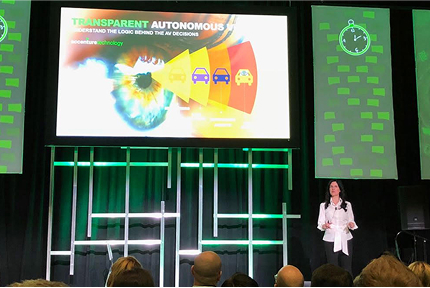
Providing Transparency to Autonomous Vehicles
Problem Deep Neural Networks (DNNs) in autonomous vehicles (AVs) were opaque, making it hard to diagnose failures or prove algorithm maturity, leading to development halts and public distrust after accidents.
Solution Replaced the opaque "Planning" module in the Apollo AV architecture with transparent qualitative models and formal traffic rules, explaining decision-making clearly.
Outcome Improved transparency boosted trust, enabled regulatory compliance, and adapted AVs to edge cases, with a patented innovation validating its impact.
Detailed Challenges:Autonomous Vehicles (AVs) heavily rely on Deep Neural Networks (DNNs), which are inherently opaque and non-interpretable.
When DNNs fail, engineers lack visibility into the reasoning process, making debugging extremely difficult.
This lack of transparency can halt development and lead to public distrust, especially in the aftermath of accidents.
It is impossible to demonstrate algorithm maturity, a requirement for regulatory approval and investor assurance.
Technical Steps:Leveraged the Apollo open-source AV architecture as the development platform.
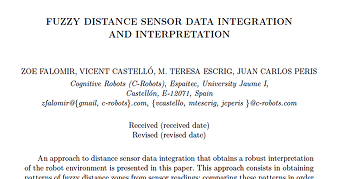
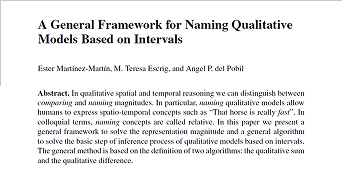
Replaced the black-box "Planning" module with a set of symbolic, qualitative models that explain the reasoning behind decisions.
Incorporated formal traffic rules into the system to guide and constrain behavior in an interpretable, human-understandable way.
Detailed Benefits:Achieved full transparency in decision-making, enabling engineers to trace and explain AV behavior.
Increased public and stakeholder trust by making system logic auditable and defensible.
Allowed the AV to adapt more effectively to exceptional situations compared to traditional DNN-based systems.
Enabled the demonstration of algorithmic maturity, accelerating safe deployment and regulatory compliance.
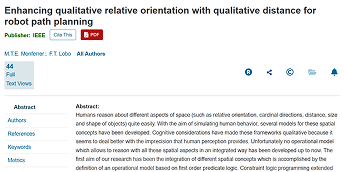
The solution was recognized with a patent (US11084496B2), solidifying its innovation and impact in the AV industry.
AI-Powered DNA Sequencing from Unstable Data
Problem A biotech startup’s nanopore DNA sequencing faced unstable data, with only 30% of bases identifiable, risking their funding due to failed machine learning attempts.
Solution Developed a transparent symbolic AI model to classify noisy data, creating a functional software solution in six months.
Outcome Achieved 86% accuracy, secured funding, and earned a patent, marking a breakthrough in AI-driven genomics.
Detailed Challenges:A biotech startup was developing a nanopore-based DNA sequencing technology but faced highly unstable time-series signal data.
Two prior machine learning attempts had failed due to the inconsistency of the input.
Only about 30% of DNA bases could be manually identified, and no working software solution existed.
The absence of results threatened to derail the company’s next round of investment.
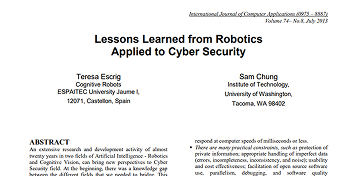
Technical Steps:Applied a symbolic AI model I had previously developed for cognitive robotics.
Built a qualitative pattern recognition system tailored to interpret noisy, unstable signal data.
Developed a fully functional, transparent software solution in just six months, bypassing the need for data stability required by conventional ML.
Detailed Benefits:Achieved 86% accuracy in automatically classifying DNA sequences, despite unstable input.
Delivered full transparency in how the system made decisions—critical for scientific, medical, and regulatory contexts.
The client secured funding, ensuring the startup’s survival and growth.
The solution was awarded a patent (US10338197B2), positioning it as a significant breakthrough in AI-driven genomics.
Accelerating Aerospace Manufacturing with Hybrid AI
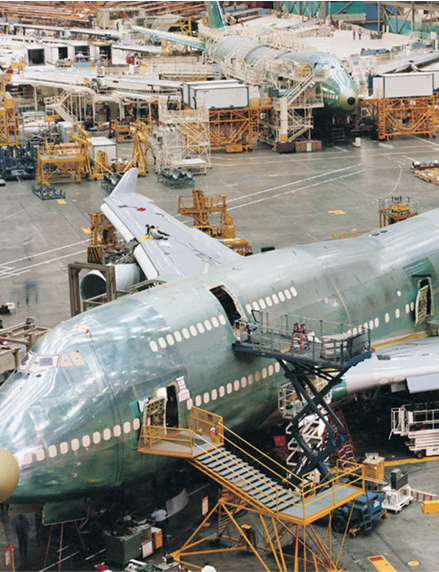
Problem An aerospace firm struggled with deformed fuselage seams, requiring months of trial-and-error engineering to maintain aerodynamics.
Solution Combined a Qualitative Model to classify deformations with Deep Reinforcement Learning to optimize seam placement automatically.
Outcome Reduced seam placement to seconds, saving millions in labor and delays, showcasing hybrid AI’s power in manufacturing.
Detailed Challenges:An aerospace company struggled with a high-cost engineering problem: placing seams to close gaps in fuselage sections deformed during transportation.
Thousands of engineers were involved in resolving each case through months of trial and error.
Seam placement had to preserve the aircraft’s aerodynamic properties, making manual solutions slow and error-prone.
Technical Steps:Developed a Qualitative Model to classify the fuselage cross-section into concavities and convexities.
Applied Deep Reinforcement Learning to find the optimal seam configuration tailored to each unique deformation.
Combined symbolic AI with learning-based methods for adaptability and precision.
Detailed Benefits:Seam placement was automatically calculated in seconds, eliminating the need for months of manual engineering work.
The company saved millions in labor and production delays.
Demonstrated the effectiveness of hybrid AI approaches for solving complex, high-stakes manufacturing challenges.
Integrating Responsible AI into Microsoft’s MLOps Pipeline
Problem Microsoft’s Responsible AI tools were underused as they weren’t in the MLOps pipeline, leading to 85% of models going undeployed due to trust issues.
Solution Integrated these tools into the MLOps workflow with a user-friendly interface for seamless ethical checks.
Outcome Standardized responsible AI, increased model deployment, and strengthened Microsoft’s leadership in ethical AI solutions.
Detailed Challenges:Microsoft had developed a range of Responsible AI tools (impact assessment, transparency notes, error analysis, data bias detection, what-if analysis).
These tools were siloed and not integrated into the machine learning development process (MLOps).
As a result, adoption was low, and 85% of ML models were not deployed by customers—primarily due to lack of trust, poor transparency, and non-reproducible results.
Technical Steps:Microsoft had developed a range of Responsible AI tools (impact assessment, transparency notes, error analysis, data bias detection, what-if analysis).
I led the integration of all Responsible AI tools into the MLOps architecture, embedding them directly into the machine learning workflow.
Made tools accessible with the click of a button, allowing data scientists to apply them seamlessly at various stages of development.
Enabled responsible practices to become part of the default workflow—not an afterthought.
Detailed Benefits:Responsible AI tools were actively used in the development and deployment of customer ML models.
Improved trust, reproducibility, and accountability, leading to a higher deployment rate of AI models.
Elevated Microsoft's position as a leader in operationalizing ethical AI at scale.
Empowering Ethical ML Deployment Through Transparent Business Reporting
Problem Uneven ML performance across user cohorts at Microsoft hid biases, risking harm and uninformed deployment decisions.
Solution Created a Business Owner Report with visual cohort breakdowns to highlight disparities and guide decision-making.
Outcome Enabled fairer models and informed deployments, aligning technology with ethical responsibility and real-world impact.
Detailed Challenges:Machine learning models developed for Microsoft customers often produced uneven performance across user cohorts.
Biases in the data or model design were hidden in the black-box nature of ML, creating potential harm to certain users.
Business owners lacked visibility into how models impacted different segments, and even data scientists sometimes couldn’t fully understand the implications.
This led to uninformed deployment decisions with ethical and operational risks.
Technical Steps:Designed a Business Owner Report that visually represented key model insights and highlighted disparities in performance across cohorts.
Enabled clear communication between data scientists and business leaders, making model behavior understandable for non-technical stakeholders.
The report flagged cohorts where performance was worse than random, indicating where models should not be deployed or where workarounds were needed.
Detailed Benefits:Data scientists were empowered to refine and improve model fairness and accuracy.
Business owners gained clarity and could make informed, responsible deployment decisions.
Helped prevent unintended harm and enabled the strategic use of AI models in ways that aligned with both impact and ethics.
Featured Research
Original research from the Sovereignty Institute exploring how artificial intelligence is reshaping human judgment, leadership, and decision-making.
As AI transforms how decisions are made, we investigate what must evolve to preserve human agency, responsibility, and long-term effectiveness.